How to Maintain Mercury & Yamaha Outboard Engines
September 11, 2025 |
By Ali
Your outboard engine is the heart of your boat, and like any hardworking piece of machinery, it needs regular care to deliver reliable performance season after season. Mercury and Yamaha outboards are built to last, but even the most robust engines can fail without proper maintenance. Whether you’re a weekend angler or a daily cruiser, following a consistent maintenance routine will save you money on repairs and keep you on the water longer.
This guide covers the essential maintenance tasks every Mercury and Yamaha outboard owner should know, from daily checks to annual services. You’ll learn how to spot problems early, choose the right fluids, and perform simple tasks that make a big difference in engine longevity.
What is the recommended maintenance schedule for Mercury and Yamaha outboards?
A structured maintenance schedule is your best defense against unexpected breakdowns. Both Mercury and Yamaha provide detailed maintenance schedules, but the frequency of certain tasks can vary based on how often you use your boat and the conditions you operate in.
Daily and weekly checks you shouldn’t ignore
Before every outing, spend a few minutes checking your engine’s basics. Inspect the propeller for damage or fishing line wrapped around the shaft. Check that the engine tilts and steers smoothly. Look for any obvious leaks or loose connections.
Weekly checks should include monitoring fuel levels and examining fuel lines for cracks or soft spots. Check your battery connections and test your engine’s cooling system by running it briefly and confirming water flows from the tell-tale hole.
Monthly and seasonal inspections for reliability
Monthly maintenance involves deeper inspections. Check and top up engine oil, examine spark plugs for wear or carbon buildup, and inspect the fuel filter for contamination. Test your engine’s charging system and clean any corrosion from electrical connections.
At the start and end of each boating season, perform more thorough checks. Inspect the water pump housing for damage, examine belts and hoses, and test your engine’s thermostat operation.
Annual service intervals recommended by manufacturers
Both Mercury and Yamaha recommend annual professional servicing for most recreational users. This typically includes changing engine oil and filters, replacing spark plugs, inspecting the fuel system, and testing compression across all cylinders.
High-use engines or those operating in harsh conditions may need service every 100 hours instead of annually. Commercial operators should follow hour-based schedules rather than calendar-based ones.
What type of oil should I use for my outboard?
Using the correct oil is crucial for engine protection and performance. The wrong oil can cause poor lubrication, increased wear, and potential engine damage.
Differences between 2-stroke and 4-stroke oil requirements
2-stroke outboards use oil that mixes with fuel to lubricate internal components. This oil burns during combustion, so it must be formulated to leave minimal deposits. 4-stroke engines have separate oil systems similar to car engines, requiring oil that stays in the crankcase longer.
Never use 4-stroke oil in a 2-stroke engine or vice versa. The formulations are completely different, and mixing them up can cause serious engine damage.
Why OEM-branded oil ensures better protection
Mercury and Yamaha engineer their oils specifically for their engines’ requirements. Mercury’s OptiMax and DFI oils are formulated for their direct injection systems, while Yamaha’s Yamalube products complement their engine designs.
While quality aftermarket oils meeting NMMA TC-W3 standards (for 2-strokes) or appropriate viscosity ratings (for 4-strokes) can work well, OEM oils provide the most comprehensive protection and maintain warranty coverage.
How to check and top up oil correctly
For 2-stroke engines with oil injection systems, check the oil reservoir regularly and refill before it gets too low. For 4-stroke engines, check oil level with the engine vertical and off for at least 5 minutes. Add oil gradually and recheck levels to avoid overfilling.
How does ethanol-blended fuel affect outboard engines, and how can I prevent damage?
Ethanol in gasoline creates unique challenges for marine engines, especially during storage periods.
Problems ethanol causes in marine engines
Ethanol attracts moisture from the air, creating water-alcohol mixtures that separate from gasoline. This phase separation can clog fuel systems and cause corrosion in metal components. Ethanol also softens rubber and plastic parts not designed for alcohol exposure.
Older engines are particularly vulnerable, as their fuel systems may contain materials that deteriorate when exposed to ethanol blends.
Fuel stabilizers and additives that reduce risks
Quality fuel stabilizers like Mercury’s Quicksilver or Yamaha’s Fuel Stabilizer Plus help prevent phase separation and gum formation. Add stabilizer to fresh fuel before storing your boat, following the manufacturer’s recommended ratios.
Water-absorbing additives can help manage small amounts of moisture, but they’re not a substitute for good fuel management practices.
Best storage practices when using ethanol-blended fuel
Fill your fuel tank completely before storage to minimize air space where condensation can form. Add stabilizer and run the engine to distribute treated fuel throughout the system. For long-term storage, consider draining the fuel system entirely or using ethanol-free fuel if available.
Why is flushing the engine after each use important?
Regular flushing removes salt, sand, and debris that can damage your engine’s cooling system over time.
How saltwater and debris cause internal damage
Salt crystals form as water evaporates inside your engine, restricting water passages and causing overheating. Sand and debris can damage the water pump impeller and scratch internal surfaces. Even in freshwater, algae and sediment can build up in cooling passages.
Correct flushing techniques for Mercury and Yamaha outboards
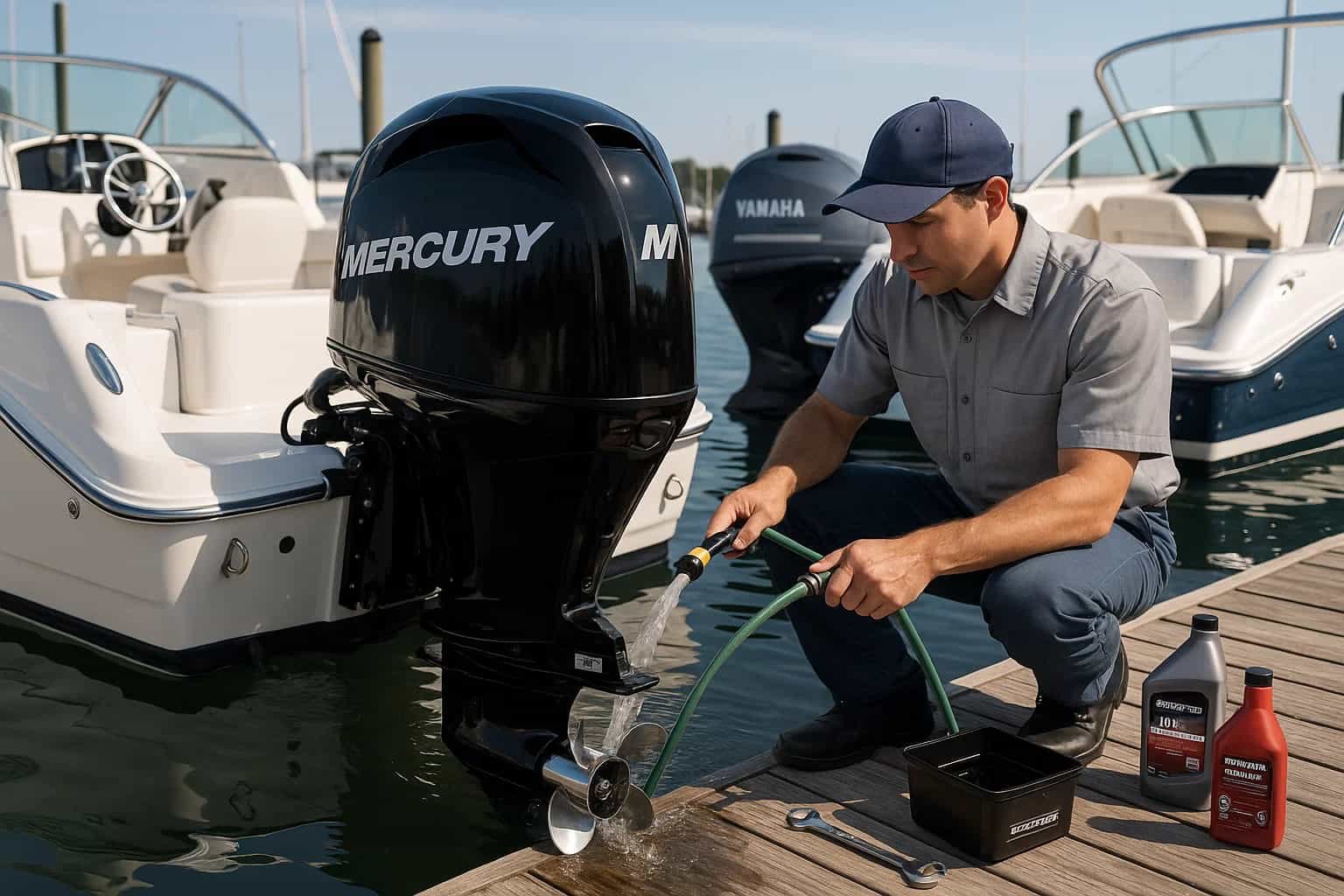
Both manufacturers offer flushing attachments that connect to your engine’s water intake. Run fresh water through the system for 5-10 minutes while the engine idles. Some newer models have built-in flushing ports that make this process even easier.
Never run your engine without water flow, even briefly, as this can damage the water pump impeller.
Mistakes to avoid while flushing your engine
Don’t use high water pressure, which can force water past seals into areas where it shouldn’t go. Never flush with the engine tilted up, as this can trap air in the cooling system. Avoid using harsh chemicals or cleaners unless specifically recommended by the manufacturer.
How often should I replace the water pump impeller?
The water pump impeller is a wear item that needs regular replacement to prevent overheating.
Signs your impeller is wearing out
Reduced water flow from the tell-tale, engine running hotter than normal, or steam from the engine bay all suggest impeller problems. Torn or missing impeller blades can cause complete cooling system failure.
Standard replacement intervals for Mercury and Yamaha
Most manufacturers recommend impeller replacement every 2-3 years for recreational use, or every 300 hours for high-use applications. Engines used in sandy or debris-filled water may need more frequent replacement.
Why impeller care protects your cooling system
A failing impeller can’t move enough water to cool your engine properly. Overheating can warp cylinder heads, damage pistons, and require expensive repairs. The impeller is relatively inexpensive compared to engine rebuild costs.
What are common signs of lower unit issues?
The lower unit houses your engine’s gears and propeller shaft, and problems here can leave you stranded.
Leaks, noises, and vibration you shouldn’t ignore
Gear oil leaking from the lower unit indicates seal problems that can lead to water contamination and gear damage. Grinding or whining noises during gear changes suggest worn gears or shift components. Unusual vibration may indicate propeller damage or shaft problems.
Checking gear oil for early signs of trouble
Check gear oil color and consistency during regular maintenance. Milky or metallic-contaminated oil indicates water intrusion or gear wear. Dark, burnt-smelling oil suggests overheating or excessive wear.
How to prevent costly lower unit repairs
Change gear oil annually or according to manufacturer recommendations. Inspect the propeller regularly for damage that could cause vibration and shaft wear. Be careful in shallow water to avoid hitting rocks or debris that can damage the lower unit.
How do I winterize my outboard engine?
Properly winterizing your outboard engine is crucial for protecting it during periods of inactivity and ensuring it runs smoothly when the season begins again. Follow these steps to safeguard your engine from damage caused by freezing temperatures, moisture, and fuel degradation.
Fuel system treatment before storage
Begin the winterization process by stabilizing the fuel in your tank. Add a high-quality fuel stabilizer to prevent fuel deterioration, which can lead to varnish and deposits clogging the fuel system. Ensure the engine runs for a few minutes after adding the stabilizer, allowing it to circulate through the fuel system and reach the carburetor or injectors.
Protecting internal components with fogging oil
Fogging oil is essential for protecting the internal components of your outboard engine from corrosion caused by moisture. Apply it by spraying directly into the engine’s air intake or using a specialized attachment through the spark plug holes. This coats the internal surfaces with a layer of lubricant, preventing rust and ensuring moving parts stay protected during storage.
Battery care and proper engine storage tips
Remove the battery from the engine and clean it thoroughly to prevent corrosion on the terminals. Store it in a cool, dry place, and connect it to a trickle charger to maintain its charge over the winter. Additionally, ensure the engine is stored upright to allow water to drain completely and prevent freezing, as trapped water can lead to severe internal damage.
Can I perform maintenance myself, or should I use a dealer?
Deciding whether to perform outboard engine maintenance yourself or rely on a dealer depends on your skill level, the complexity of the task, and the potential impact on your warranty. Weighing these factors can help you make an informed decision.
Routine tasks most boat owners can handle
Basic maintenance like changing the gear oil, replacing spark plugs, and cleaning or replacing the fuel filter can often be performed by boat owners with the appropriate tools. Regularly flushing the engine with fresh water and greasing the fittings also fall under routine tasks and are essential for the longevity of your outboard engine.
When professional servicing is the smarter choice
For more complex issues, such as diagnosing electronic problems, inspecting timing belts, or performing in-depth lower unit repairs, professional servicing is highly recommended. Dealers and certified technicians have the expertise, specialized tools, and diagnostic equipment to handle intricate repairs that are beyond the scope of a typical boat owner.
Cost and warranty considerations for DIY vs. dealer
While doing maintenance yourself can save money, it’s essential to review your warranty terms. Some manufacturers require maintenance to be performed by an authorized dealer to maintain warranty coverage. Additionally, mistakes made during a DIY repair can lead to costly damages, possibly outweighing the initial savings. Always balance the potential risks and benefits before deciding between DIY maintenance and professional servicing.
What warranties cover Mercury and Yamaha outboards?
Standard coverage for new engines
Mercury and Yamaha outboards both come with standard limited warranties for new engines, typically lasting 3 to 5 years depending on the model and region of purchase. These warranties generally cover defects in materials or workmanship under normal use and conditions. Coverage includes major engine components, such as powerheads, gearcases, and electrical systems, but may exclude wear-and-tear items like propellers, filters, or anodes. Always consult the warranty documentation for your specific engine model to understand the full scope of coverage.
Extended warranties and what they include
Both Mercury and Yamaha offer extended warranty programs for added peace of mind beyond the standard warranty period. For Mercury, the extended coverage is often marketed as Mercury Product Protection (MPP), while Yamaha provides the Yamaha Extended Service (Y.E.S.) plan. These extended warranties cover similar components as the original warranty but may also include options like towing assistance or additional breakdown coverage. Extended plans are usually available for purchase within a specific timeframe after buying the outboard.
How maintenance records affect warranty claims
Proper maintenance is essential to keeping warranty coverage valid for both Mercury and Yamaha outboards. Manufacturers typically require proof that routine services, such as oil changes and filter replacements, were performed in accordance with the recommended schedule. Accurate and detailed maintenance records, including receipts or service logs, can expedite claims if a warranty repair becomes necessary. Neglecting maintenance or failing to provide adequate records may result in denied claims.
Are there apps to track maintenance for Mercury and Yamaha engines?
Official Mercury and Yamaha mobile apps
Both Mercury and Yamaha have developed official mobile apps to help owners track maintenance and monitor engine performance. Mercury’s VesselView Mobile app links directly to compatible outboards, providing live engine data, a maintenance schedule, and alerts for upcoming services. Similarly, Yamaha’s MyYamahaOutboards app offers tailored maintenance schedules, service history logs, and reminders to keep up with recommended care for Yamaha engines.
Third-party apps that simplify maintenance tracking
Several third-party apps exist for tracking maintenance for outboard engines, including Mercury and Yamaha models. These apps, such as Vessel Maintenance Tracker or Boater’s Toolkit, allow users to log service activities, set alerts for upcoming tasks, and maintain digital records. While not engine-brand specific, these apps can be a flexible and convenient tool for those owning multiple types of marine equipment.
Why digital records make service scheduling easier
Moving from physical service logs to digital records simplifies maintenance scheduling by consolidating all data in one accessible location. Digital records are harder to lose and can be easily shared with authorized dealers if warranty claims arise. Additionally, apps often automate reminders for upcoming service, reducing the risk of forgetting critical tasks and extending the longevity of outboard engines.
Keep your engine running for years to come
Proper maintenance might seem time-consuming, but it’s far less expensive and frustrating than dealing with major repairs or being stuck on the water. Your Mercury or Yamaha outboard is designed to provide many years of reliable service when cared for properly.
Start with the basics: regular oil changes, proper fuel management, and consistent flushing after each use. Pay attention to your engine’s normal sounds and behavior so you can spot changes early. When in doubt, consult your owner’s manual or a qualified marine technician.
Remember that prevention is always cheaper than repair. A well-maintained outboard will not only save you money but also ensure that your time on the water is spent enjoying your boat repair rather than fixing it.

Ali
Ali Hassan is a seasoned SEO content writer with over 10 years of experience in crafting high-performing content for WordPress websites. Specializing in keyword-rich blog posts, landing pages, and service descriptions, Ali blends technical SEO knowledge with engaging storytelling to drive organic traffic and improve search engine rankings.